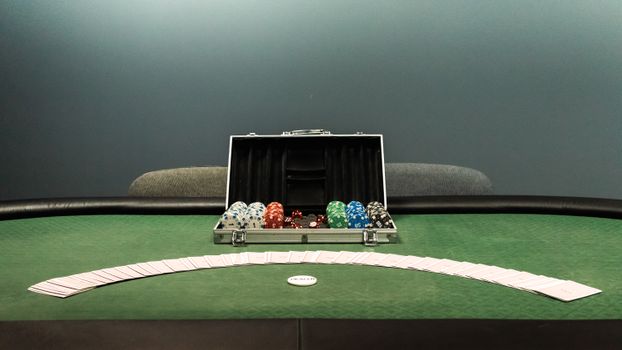
Poker might be synonymous with Texas Hold’em for most casual players, but the world of poker is vibrant with variety. From Omaha to Stud, each variant offers unique challenges and rewards, captivating enthusiasts with diverse strategies and styles of play. This exploration of poker’s many variations will deepen your appreciation for the game, highlight what makes each format distinct, and help you choose which version best suits your skills and interests.
The Allure of Poker Variations Beyond Texas Hold’em
While Texas Hold’em is the dominant force in poker rooms and televised tournaments, it’s just one branch on the poker family tree. According to the World Series of Poker (WSOP), about 80% of their events are Texas Hold’em, but the remaining 20% showcase other games that demand different skills and mindsets. Omaha and Stud, for example, have fostered their own dedicated communities and professional circuits. The diversity in poker variants not only keeps the game fresh but also pushes players to adapt, learn new rules, and develop broader strategies.
In 2023, the Global Poker Index reported that of the top 100 ranked professionals, nearly 40% regularly compete in non-Hold’em events. This demonstrates that true mastery in poker often involves versatility across games. Whether you’re looking for a new challenge or want to understand the full spectrum of poker, exploring these variations opens up a world of opportunity.
Omaha Poker: Dynamic Action and Big Pots
Omaha is perhaps the most popular alternative to Texas Hold’em, especially in Europe. Its most common form, Omaha Hi, shares many basic rules with Hold’em—such as community cards and betting rounds—but introduces critical differences that change the game’s texture dramatically.
Key characteristics of Omaha: - Each player is dealt four hole cards (instead of two). - Players must use exactly two of their hole cards and three from the five community cards to make their hand. - The most popular versions are Pot-Limit Omaha (PLO) and Omaha Hi-Lo.The extra hole cards in Omaha mean more possible hand combinations. As a result, winning hands are typically much stronger than in Hold’em. For example, the average winning hand at showdown in PLO is often a flush or full house, not just a pair or two pair. The game’s structure fosters big draws and larger pots, leading to fast-paced, action-heavy play.
Omaha Hi-Lo (or Omaha 8-or-Better) adds another layer by splitting the pot between the best high and low hands, provided the low hand qualifies (five cards eight or lower, no pairs). This variant rewards players who can track multiple possibilities and manage complex split-pot scenarios.
Seven-Card Stud: A Classic Game of Memory and Skill
Before Texas Hold’em took the world by storm, Seven-Card Stud was the king of poker rooms, especially on the East Coast of the United States. Unlike Hold’em and Omaha, Stud is a “closed” game—there are no community cards. Instead, each player is dealt a mixture of face-up and face-down cards over several betting rounds.
Main features of Seven-Card Stud: - Each player receives seven cards: three face down (“hole cards”) and four face up (“door cards”). - Players must make the best five-card hand from their seven cards. - There are five betting rounds, and no community cards.Stud rewards sharp memory and attention to detail. Since four cards are visible for each player, remembering exposed cards gives a significant edge in calculating odds and predicting opponents’ holdings. Seven-Card Stud tournaments, though fewer in number, are still featured at the WSOP and attract players who enjoy its deliberate pace and psychological depth.
Razz, 2-7 Triple Draw, and Other Unique Poker Variations
Beyond the well-known forms, poker’s creative spirit has spawned a host of lesser-known but fascinating games. Here’s a look at a few:
- $1 This is a lowball version of Seven-Card Stud. The goal is to make the lowest possible five-card hand, with straights and flushes ignored, and aces always low. An A-2-3-4-5 (the “wheel”) is the best hand. - $1 Players are dealt five cards and can draw up to three times, discarding any cards they wish. The goal is to make the lowest possible hand, with 2-3-4-5-7 (with no flush) being the nuts. Straights and flushes count against you. - $1 Originating in Korea, Badugi is a draw game where players seek the lowest four-card hand with all cards of different suits and no pairs.These games are favorites in mixed-game formats like H.O.R.S.E. or 8-Game at the WSOP, which rotate through multiple poker variants. Mixed games test a player’s adaptability and comprehensive poker skills, and are considered the ultimate challenge among professionals.
Comparing Poker Variations: Key Differences at a Glance
To help clarify the distinctions among the most popular poker variants, here’s a side-by-side comparison:
| Variant | Hole Cards | Community Cards | Betting Rounds | Hand Strength | Unique Feature |
|---|---|---|---|---|---|
| Texas Hold’em | 2 | 5 | 4 | One pair or better | Most popular, easy to learn |
| Omaha | 4 | 5 | 4 | Flush/full house common | Must use 2 hole + 3 community cards |
| Omaha Hi-Lo | 4 | 5 | 4 | High and low split | Split pot format |
| Seven-Card Stud | 3 down, 4 up | 0 | 5 | Two pair or better | No community cards |
| Razz | 3 down, 4 up | 0 | 5 | Lowest hand wins | Lowball format |
| 2-7 Triple Draw | 5 | 0 | 4 | Lowest 2-3-4-5-7 | Multiple draw rounds |
This table highlights the structural and strategic diversity among poker’s main variants. For example, Omaha’s requirement to use exactly two hole cards adds complexity, while Stud’s lack of community cards demands strong memory and observation skills. Razz and 2-7 Triple Draw upend traditional hand rankings, rewarding low hands instead of high.
How Poker Variations Influence Strategy and Player Development
Learning different forms of poker is not just about variety—it’s a way to sharpen your mind and improve overall poker ability. Each variant emphasizes different skills:
- $1 requires understanding of pot odds, drawing hands, and reading complex board textures. - $1 improves memory, as players must track exposed cards and deduce opponents’ holdings. - $1 like Razz and 2-7 Triple Draw force players to rethink hand values and adapt to unfamiliar situations.Many top professionals, such as Phil Ivey and Daniel Negreanu, are celebrated for their prowess across multiple poker formats. In fact, the WSOP’s coveted Player of the Year title often goes to those who excel in mixed-game events, not just Hold’em. In 2022, Dan Zack won the title after cashing in seven different variants.
For home games or local poker nights, introducing new variants can keep the group engaged and help everyone become more well-rounded players. Online poker sites like PokerStars and partypoker offer Omaha, Stud, and exotic draw games, giving you the chance to practice and experiment with minimal risk.
Poker’s Global Reach: Regional Favorites and Cultural Influence
Poker is a global game, and regional preferences have shaped the popularity of its variants. For example:
- $1 is the second most popular game in Europe and has a strong presence in Scandinavian countries. - $1 still holds sway in certain East Coast U.S. casinos, particularly in New Jersey and Atlantic City. - $1 and other draw games are favorites in Asian poker circles. - $1 like H.O.R.S.E. and Dealer’s Choice are often featured at major tournament series, highlighting the importance of versatility.The International Federation of Poker (IFP) estimates that over 100 million people worldwide play poker in some form. Their research shows that local traditions and casino offerings strongly influence which variant becomes dominant in a given region.
Final Thoughts: Embracing the Full Spectrum of Poker
Exploring the many variations of poker—Omaha, Stud, Razz, and beyond—enriches your experience and deepens your understanding of this timeless game. Each format brings its own challenges, requiring players to adapt strategies, master new skills, and approach familiar concepts from fresh perspectives. Whether you’re seeking bigger action, mental challenges, or simply a break from the ordinary, trying new variants can reignite your passion for poker.
As the poker world continues to evolve, the ability to play multiple formats is a mark of a true enthusiast and a path toward greater success, both at the tables and in tournament play. Don’t hesitate to step outside your comfort zone—your next favorite game could be just a deal away.