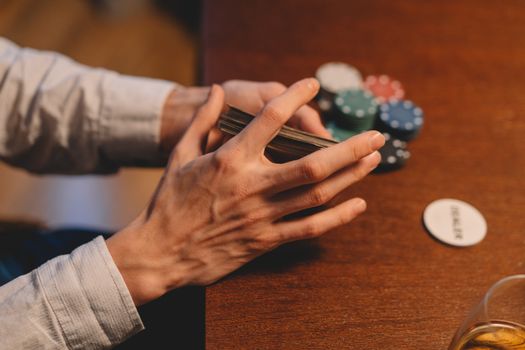
Poker is a game that sits at the crossroads of skill, psychology, and chance. Over the decades, it has evolved from smoky backroom games to high-stakes televised tournaments and online showdowns. While strategy and mathematics are celebrated facets of the game, poker is also a minefield of ethical questions that challenge even seasoned professionals. The line between gamesmanship and unethical conduct can be razor-thin, and what’s legal at the table doesn’t always feel entirely fair. This article explores the complex world of ethical dilemmas in poker, examining situations that test a player's integrity, the spirit of competition, and the boundaries of acceptable behavior.
Understanding Ethics Versus Legality in Poker
The distinction between what’s legal and what’s ethical in poker is not always clear-cut. While casinos and online platforms enforce strict rules to ensure fairness, these rules do not always cover every situation. A move might be entirely within the letter of the law but still raise ethical eyebrows among players.
For example, angle shooting—using misleading tactics without technically breaking the rules—remains a gray area. Actions like pretending to fold or hesitating to call in order to elicit a reaction from opponents might not violate any official rules, but many seasoned players consider them unsportsmanlike.
According to a 2022 survey by PokerNews, 68% of professional players reported witnessing what they considered unethical behavior during live events, even when no official rules were broken. This highlights the importance of understanding both the legal framework and the unwritten code of conduct that governs poker.
Collusion: The Ultimate Betrayal
Collusion stands as one of the gravest ethical violations in poker. It involves two or more players working together to gain an unfair advantage over others at the table. This can occur in subtle ways, such as signaling cards or sharing information, and can devastate the integrity of the game.
In online poker, collusion has become more sophisticated. Data from the 2021 Online Poker Integrity Report revealed that collusion was responsible for 34% of all detected cheating cases that year. Many major platforms employ advanced algorithms to detect patterns of suspicious play, but some forms of collusion can still slip through the cracks.
The damage caused by collusion is profound—honest players lose money and trust in the game declines. This is why the poker community universally condemns collusion, and why offenders are often banned for life from reputable venues.
Ghosting and Multi-Accounting in Online Play
The rise of online poker has introduced new ethical challenges, particularly ghosting and multi-accounting. Ghosting occurs when a more skilled player advises another in real-time during an online game, often through phone calls or chat applications. Multi-accounting involves a single player operating multiple accounts to enter the same tournament, gaining an unfair advantage.
A study by Game Integrity Solutions in 2023 found that up to 7% of high-stakes online tournaments had at least one player suspected of ghosting or multi-accounting. These practices distort the competition and rob players of fair results.
Online platforms have responded by tightening security, using digital fingerprinting and behavioral analysis to flag suspicious accounts. Still, the ethical burden remains on players to respect the integrity of the game, even when enforcement is imperfect.
Table Talk, Deception, and the Ethics of Bluffing
Poker is unique among games in that deception is not only allowed, but often celebrated. Bluffing—misrepresenting the strength of your hand to induce mistakes from opponents—is a cornerstone of strategy. However, when does deception cross the line from clever gameplay into unethical territory?
Table talk, or verbal interaction during hands, is one area where ethical questions arise. Some players use misleading statements or questions to manipulate opponents. While "speech play" is generally accepted, outright lying about the game state (such as claiming to have folded when you haven’t) is often frowned upon.
The difference lies in intent and context. Bluffing within the flow of normal play is fair game, but using deception to exploit loopholes or disrupt opponents’ concentration can be considered unethical.
The Gray Area: Angle Shooting and Soft Play
Not all unethical behavior is as obvious as collusion or cheating. Angle shooting refers to exploiting technicalities or ambiguous situations for unfair advantage, typically without breaking formal rules. Examples include purposely acting out of turn to gauge reactions, hiding chips to misrepresent your stack, or feigning confusion to buy time.
Soft play is another subtle form of ethical violation, where players avoid playing aggressively against friends or partners at the table. This undermines the competitive nature of poker and can be particularly problematic in high-stakes tournaments.
To illustrate some of these ethical dilemmas, consider the following comparison of actions and how they are viewed in the poker community:
| Action | Legality | Ethical Standing | Community View |
|---|---|---|---|
| Bluffing | Legal | Ethical | Widely Accepted |
| Angle Shooting | Legal | Questionable | Often Criticized |
| Collusion | Illegal | Unethical | Universally Condemned |
| Soft Play | Legal | Unethical | Frowned Upon |
| Ghosting | Illegal (Online) | Unethical | Condemned |
The Role of Tournament Directors and Peer Pressure
Enforcement of ethical play often falls to tournament directors (TDs) in live events. Their job is to interpret the rules, resolve disputes, and maintain a fair atmosphere. However, not all situations are black and white. Sometimes TDs must use judgment to address behaviors that fall into ethical gray areas.
For example, a TD might issue a warning for angle shooting or soft play, even if no explicit rule was broken. In the 2022 World Series of Poker, there were over 200 documented cases where TDs had to make discretionary rulings based on the spirit of the game rather than the letter of the law.
Peer pressure also plays a significant role. The poker community is tight-knit, and players known for unethical behavior can quickly find themselves ostracized. Reputation matters: a 2021 survey by Card Player Magazine found that 74% of professional players would avoid tables with known angle shooters and 82% supported banning repeat offenders from major events.
Why Poker's Ethical Dilemmas Matter
Ethical dilemmas in poker are more than just theoretical debates—they have real consequences for the game’s reputation, the trust between players, and the enjoyment of the experience. Unlike many other games, poker’s reliance on psychological warfare and incomplete information means that integrity is paramount.
When ethical standards slip, the results can be disastrous. The infamous "Potripper" scandal in 2007, where a player used insider access to see opponents’ cards on Absolute Poker, resulted in millions of dollars in losses and lasting damage to the online poker industry’s credibility.
On the flip side, a commitment to ethical play has helped poker grow into a globally respected sport. High-profile tournaments like the World Series of Poker and the European Poker Tour now feature robust security measures and strict ethical codes, attracting millions of viewers and participants each year.
Final Thoughts on Navigating Poker's Ethical Challenges
Poker’s ethical dilemmas are as complex and varied as the game itself. From collusion and ghosting to the nuances of table talk and bluffing, players constantly face situations that test their integrity. While rules provide a necessary framework, much depends on the willingness of individuals and the community to uphold the spirit of fair competition.
For both newcomers and seasoned professionals, understanding and respecting poker’s ethical boundaries is essential—not just for personal honor, but for the continued growth and legitimacy of the game. By prioritizing integrity alongside skill and strategy, poker can remain the fascinating, challenging, and fair contest that has captivated generations.